















Heel spurs
A bony growth on the heel bone that often travels with chronic plantar fasciitis.
The first steps out of bed shouldn’t be the worst part of your day.
See a board-certified foot and ankle surgeon — a plantar fasciitis doctor and plantar fasciitis specialist — who diagnoses the real cause of your heel pain, often in a single visit with on-site X-ray and ultrasound, and builds a treatment plan that starts with the simplest care that works. Same-week and same-day appointments for new patients.

Plantar fasciitis is the most common reason for pain on the bottom of the heel, and the classic plantar fasciitis symptoms are hard to miss. The tell-tale sign is a sharp, stabbing heel pain with your first steps in the morning — or after you’ve been sitting for a while — that eases as you walk, then returns after a long day on your feet. See if any of these match what you’re feeling:
If several of these sound familiar, a short visit can confirm the diagnosis and get you on a plan.
The plantar fascia is a thick band of tissue that runs along the bottom of your foot, connecting the heel bone to the toes and supporting your arch like a bowstring. When it’s overloaded, tiny tears and irritation build up where it attaches to the heel — and that’s plantar fasciitis. It’s often a wear-and-tear (degenerative) problem as much as an inflammatory one, which is why the right treatment matters.
Common causes and risk factors we see in Miami patients include:
Not all heel pain is plantar fasciitis — and treating the wrong cause wastes months. As a heel pain doctor, Dr. Sandler checks for the conditions that mimic it before settling on a diagnosis:
A bony growth on the heel bone that often travels with chronic plantar fasciitis.
Pain at the back of the heel.
Especially in runners and after a spike in activity.
Such as Baxter’s nerve — and heel fat-pad atrophy, which need a different approach entirely.
Getting this right the first time is the difference between a plan that works and one that only masks the pain. It’s also why we treat heel spurs and related conditions as part of the same evaluation.
More than 9 in 10 cases resolve without surgery.
Most heel-pain diagnoses start with a careful history and a hands-on exam, pinpointing exactly where it hurts and how your foot moves. When imaging helps, you don’t leave and come back — it happens in our office:
Rules out a fracture or heel spur in under a minute.
In under a minuteShows the plantar fascia and nearby tendons in real time, without radiation.
Real-time · no radiationOnly in the rare cases that truly need it.
Only when neededBecause the diagnostics are in-house, most patients get an answer and a written treatment plan in a single appointment — not spread across three facilities and three weeks.
More than 9 in 10 cases resolve without surgery. As your plantar fasciitis treatment doctor, Dr. Sandler follows a clear plantar fasciitis treatment ladder — starting with the least invasive care that’s likely to work, and only stepping up if you’re not improving.
The foundation for nearly everyone: targeted stretching exercises for the calf and plantar fascia, activity and footwear changes, anti-inflammatory medication, and supportive measures such as custom orthotics, night splints, taping, and physical therapy. Most people feel meaningfully better within a few weeks of doing these consistently.
If conservative care stalls, we can escalate without surgery, right in the office:
If about 6–12 months of quality conservative care hasn’t resolved it, minimally invasive surgery is an option. As a board-certified foot and ankle surgeon, Dr. Sandler performs endoscopic plantar fasciotomy (a small-incision plantar fascia release) — and, when a tight calf is the driver, a gastrocnemius recession. Most patients walk out in a supportive shoe or boot the same day.
The outlook for plantar fasciitis is good. With consistent conservative care, most people improve over several weeks to a few months, and the great majority are pain-free within a year. If you have an in-office procedure or surgery, you’ll leave with a clear recovery timeline, milestones, and a follow-up schedule — plus a plan to keep it from coming back.
Once your heel pain settles, a few habits keep it away: wear supportive shoes and replace them when they wear out, stretch your calves and arches daily, ease into new activity instead of spiking it, keep your weight in a healthy range, and avoid long stretches barefoot on hard floors. If custom orthotics helped, keep using them.
Home care is a fine first step, but don’t wait it out if you notice any of these heel pain red flags — call us:
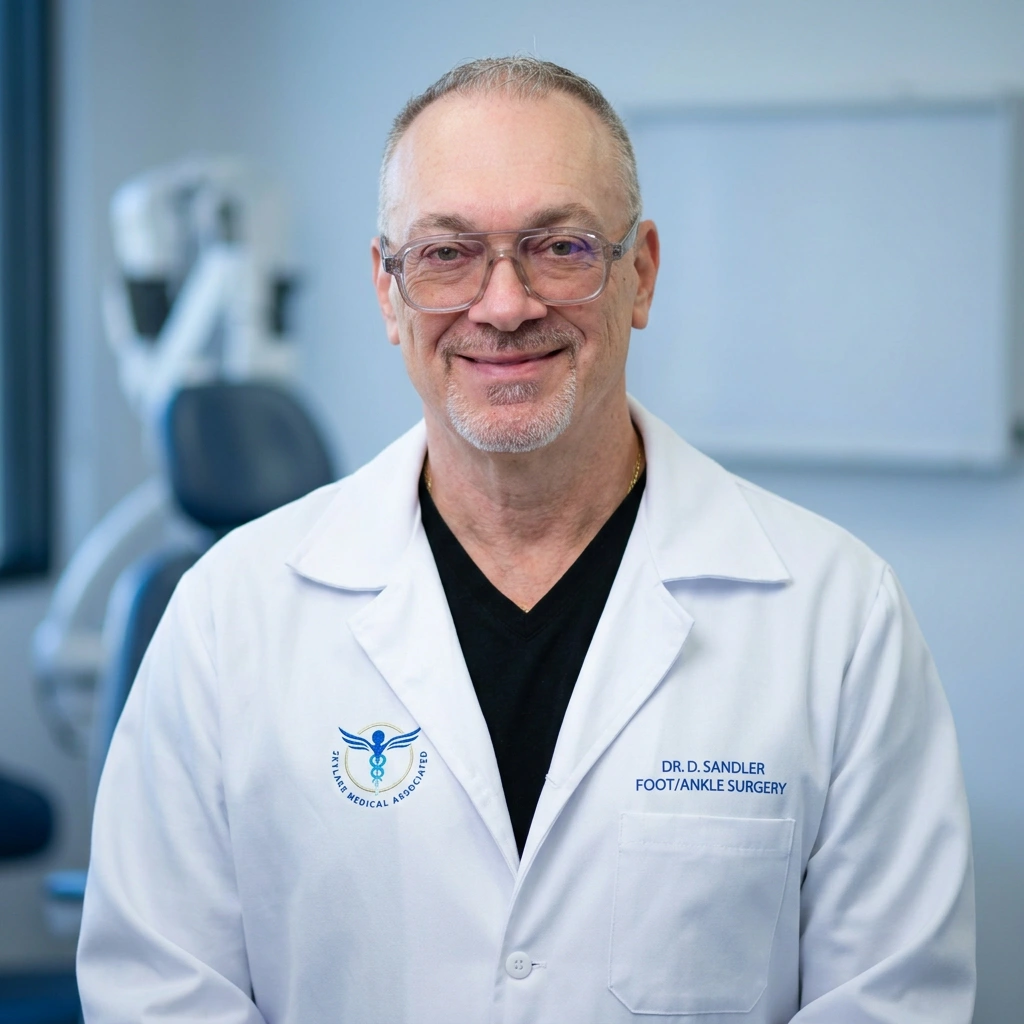
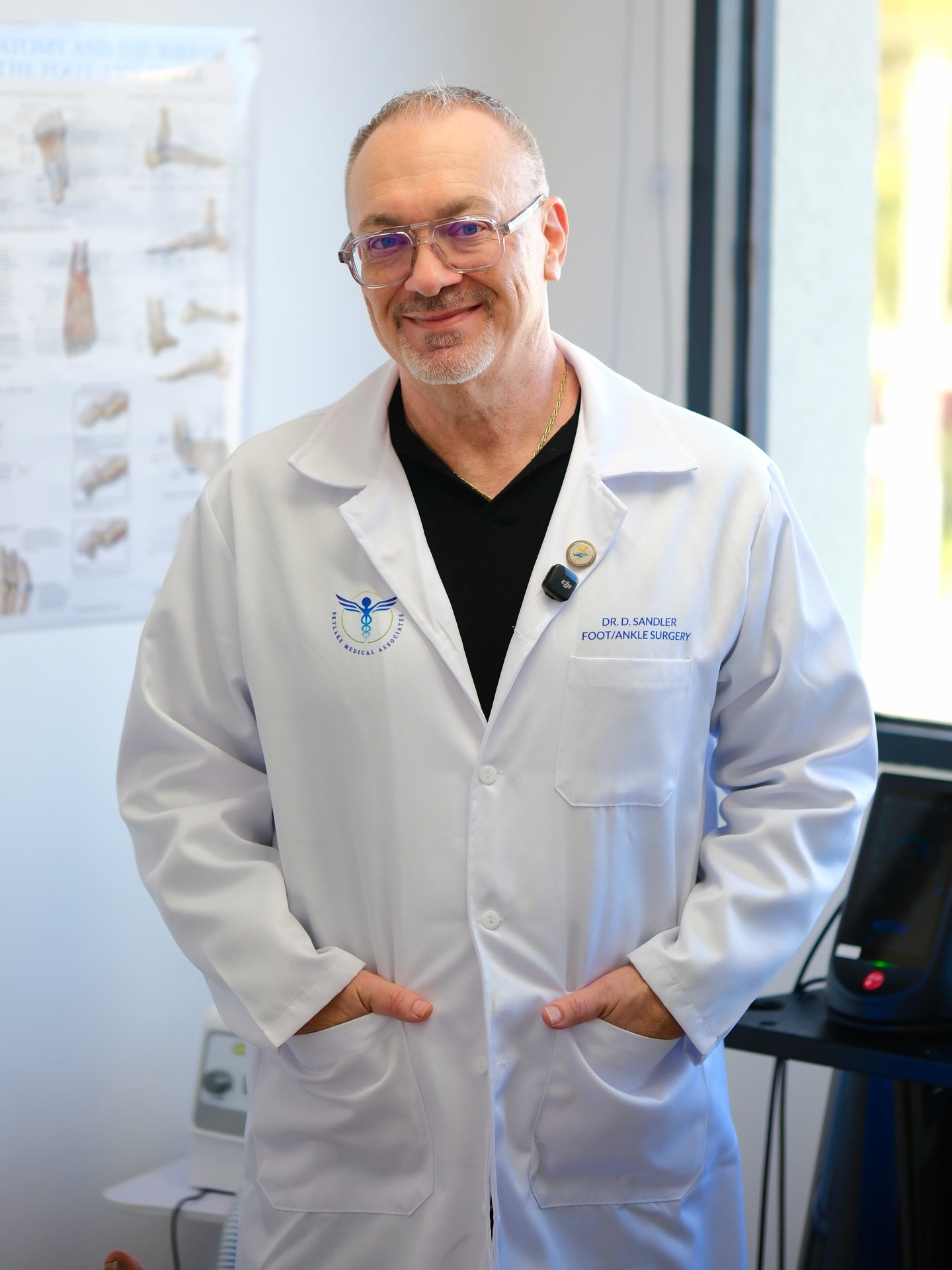
You’ll see Dr. Dmitry Sandler, DPM, FACFAS — a podiatrist and board-certified foot and ankle surgeon with more than 25 years of experience and six South Florida hospital affiliations. He is a podiatrist for plantar fasciitis and the specialist for heel pain that Miami patients rely on — treating the full range, from a first flare-up to complex, chronic heel pain, and explaining every option clearly without rushing you toward surgery. As a plantar fasciitis podiatrist, he sees this condition every week.
Rated 5.0★ on Google across 57 verified patient reviews — including patients treated for plantar fasciitis and chronic heel pain. Reviews load live below; nothing here is hand-picked.
Reviews shown are general practice reviews from verified Skylake patients and are not specific to plantar fasciitis or heel pain treatment. Individual recovery times vary — your podiatrist will set realistic expectations for your condition.
Skylake is the heel pain doctor Miami patients turn to when the first steps of the day hurt — and if you’ve been searching for a plantar fasciitis doctor near me, you’ve found one. Our North Miami Beach office is a short drive for patients across greater Miami and Miami-Dade — including North Miami, Aventura, Sunny Isles, Miami Gardens, and Hallandale Beach. If plantar fasciitis or heel pain is running your life, book online or call — same-day appointments are available.